




What Is GSM in Bath Towels? The Insider Standard Behind Every Great Hotel Bath
When you sink into a towel after a shower at a well-appointed hotel — the kind that wraps rather than wipes, that holds its loft wash after wash — there is a number behind that sensation. That number is GSM.
Understanding GSM in bath towels is the fastest way to cut through marketing language and choose textiles that perform. At TAKEANAP, GSM has shaped every weaving decision since 2004. Here is everything the hospitality industry knows about it — and most retail labels never tell you.
Key Takeaways
- GSM = grams per square metre; it measures fabric density, not softness alone
- The luxury hotel standard is 550–650 GSM for bath towels
- Zero-Twist yarn delivers hotel absorbency at lower GSM — with more open, skin-friendly pile
- OEKO-TEX Standard 100 is a safety certification for harmful substances, not a quality marker
- GSM alone doesn't determine lifespan; yarn quality and finishing process matter equally
GSM Defined: More Than Just Weight
GSM — grams per square metre — measures fabric density. It tells you how much yarn is woven into each square metre of finished textile. A higher GSM means more fibre per unit of area: the towel absorbs more, holds its structure longer, and carries the weight you feel when you unfold it.
What GSM does not measure directly:
- Softness — that depends on yarn construction and finishing chemistry
- Absorbency rate — influenced by yarn twist structure, not density alone
- Durability — fibre length and weave architecture matter as much as weight
Think of GSM as a starting point, not a verdict. A 600 GSM towel made from short-staple cotton with an aggressive finishing process will underperform a well-engineered 480 GSM towel woven from long-staple fibres. The number sets the floor; everything else determines the ceiling.
The GSM Spectrum — A Practical Fabric Breakdown
| GSM Range | Category | Typical Hand Feel | Best Use |
|---|---|---|---|
| 300–400 | Lightweight | Thin, fast-drying, minimal pile | Travel, gym, beach |
| 400–500 | Mid-weight | Everyday softness, moderate absorbency | Guest bathroom, daily rotation |
| 500–600 | Hotel-weight | Dense, plush, holds structure | Master bathroom, spa-style ritual |
| 600–700 | Luxury / spa | Maximum absorbency, heavy wrap | Indulgent daily ritual |
| 700–900 | Ultra-heavy | Slow-drying, very dense pile | Occasional use, certain robe constructions |
The hospitality standard sits at 550–650 GSM. Hotels specify this range because it balances absorbency, resilience across commercial laundry cycles, and the sensory weight that guests register as quality. Above 700 GSM, drying time increases substantially — practical in a spa setting with industrial dryers, less so on a home towel bar.
For most households, a bath towel in the 550–620 GSM range delivers the strongest balance. For oversized bath sheets and bath towels, slightly higher GSM compensates for the larger surface area without becoming impractical when wet. The exception to every drying-time caveat is zero-twist construction: because the open, untwisted fibres release moisture faster, a 700 GSM zero-twist towel dries like a far lighter one while keeping full hotel weight.
Zero-Twist Yarn: The Engineering Behind the Softest Hotel Towels
GSM describes density; yarn construction describes character. Zero-Twist is one of the most significant developments in luxury bath weaving — and among the least explained on product labels.
Conventional yarn is spun with torsion: fibres are twisted tightly together to build tensile strength. That twist creates durability but also a degree of stiffness. It also reduces absorbency, because the closed spiral restricts the fibre's natural capillary channels — the microscopic pathways that move moisture away from skin.
Zero-Twist reverses this. Fibres are held parallel, bound only by a water-soluble thread during the weaving process. On first wash, that binding dissolves. What remains is an open-pile structure where cotton fibres stand upright and unobstructed, producing:
- Faster moisture absorption — water contacts more surface area on contact
- Measurably softer hand feel — no torsion, no stiffness
- Lower GSM for equivalent performance — 500 GSM Zero-Twist often outperforms 580 GSM conventional terry on absorbency
The trade-off is pile fragility. Zero-Twist towels require care: cool or warm wash cycles, no fabric softener (which coats and clogs the open fibres), and low-heat tumble drying to restore loft. Used correctly, they stay hotel-soft for years. Washed hot with softener, they lose their character within a season.
Why GSM and Skin Wellness Are Connected
The link between towel weight and skin health rarely appears on packaging, but it is worth understanding — especially for anyone managing eczema, rosacea, or general post-shower sensitivity.
Friction is the mechanism. Lightweight towels at lower GSM require more mechanical effort to absorb moisture: more passes, more pressure, more rubbing. Repeated friction across the skin disrupts the stratum corneum — the outermost protective barrier — triggering micro-inflammation, redness, and increased transepidermal water loss.
A hotel-weight towel at 550+ GSM absorbs on contact with light pressure. Dermatologists and skin specialists consistently describe the correct drying technique as "pat, not rub" — and a higher-GSM towel makes this instinctive rather than deliberate.
Yarn certification matters here too. Towels that contact reactive or sensitive skin should carry no residual chemicals from the dyeing and finishing process. This is where OEKO-TEX enters the conversation.
OEKO-TEX Standard 100: What the Certification Actually Guarantees
OEKO-TEX Standard 100 is an independent certification system for textile products. It tests finished goods for over 100 potentially harmful substances — including pesticide residues, heavy metals, formaldehyde, and azo dyes that can decompose into carcinogenic compounds.
Certification applies to the specific finished product, not to a brand or factory in general. It requires testing by an accredited independent laboratory and annual renewal.
What OEKO-TEX Standard 100 guarantees:
- No detectable levels of listed harmful substances in the finished article
- Independent, third-party verification — not self-declaration
- Consistent re-testing requirement (not a one-time badge)
What it does not guarantee:
- Organic farming of raw fibre (that requires GOTS or USDA Organic certification)
- Environmental sustainability of production (OEKO-TEX STeP or equivalent)
- Softness, durability, or performance
For anyone buying textiles for infants, children, or individuals with contact dermatitis, OEKO-TEX Standard 100 removes a meaningful category of chemical risk. It is not a luxury differentiator — it is a safety baseline that every premium textile should clear before reaching a home.
How to Choose Your GSM Based on How You Actually Use Towels
Master bathroom / daily ritual: 550–620 GSM. Heavy enough to feel intentional; light enough to dry overnight on a towel bar without harbouring moisture.
Guest bathroom: 480–550 GSM. Guests often use towels multiple times between washes. A slightly lower GSM dries faster and reduces the odour risk in a bathroom with limited ventilation.
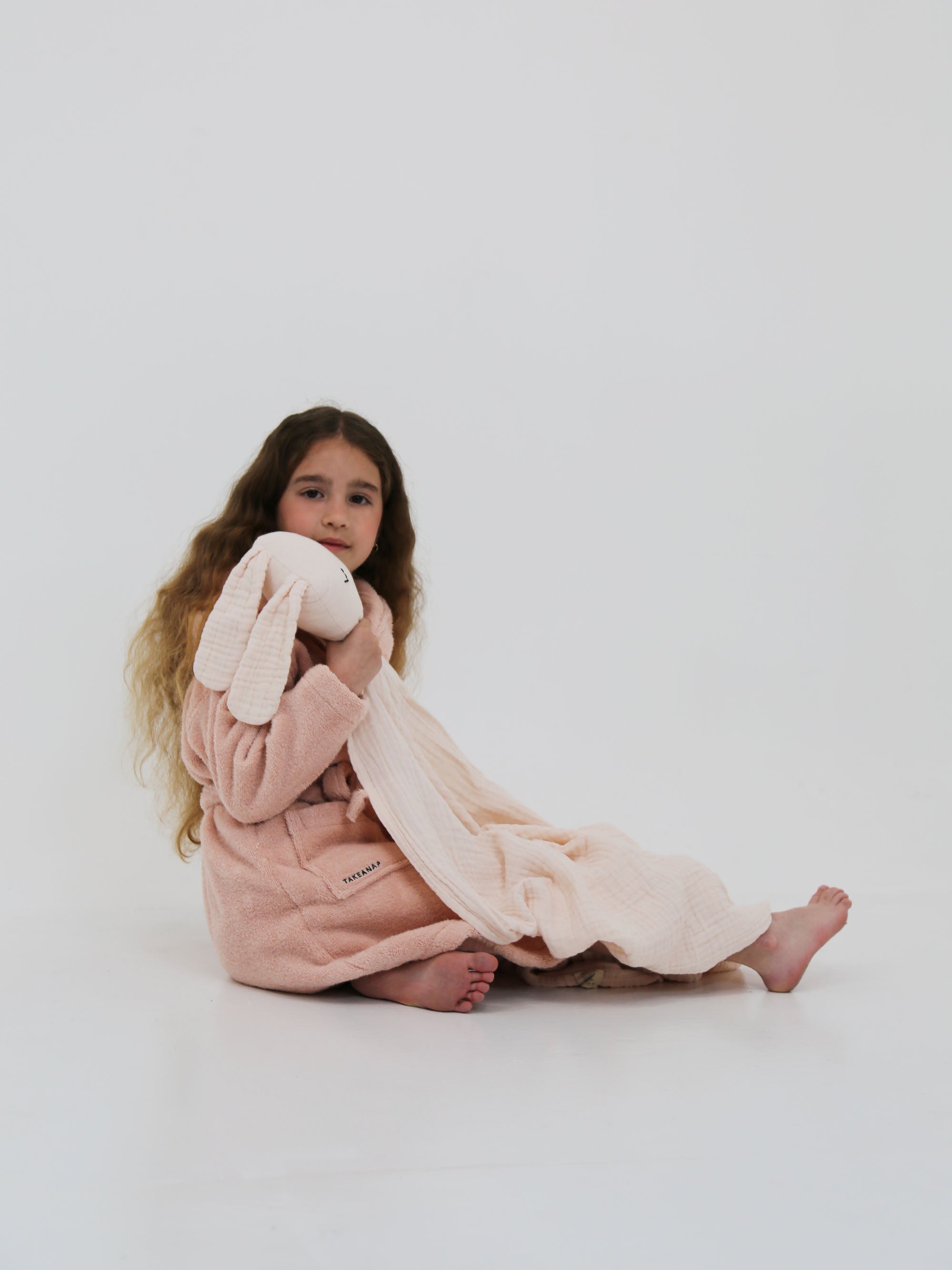
Children: 400–480 GSM. Lighter towels are easier to handle and dry faster in humid conditions. Prioritise OEKO-TEX certification over weight for this category.
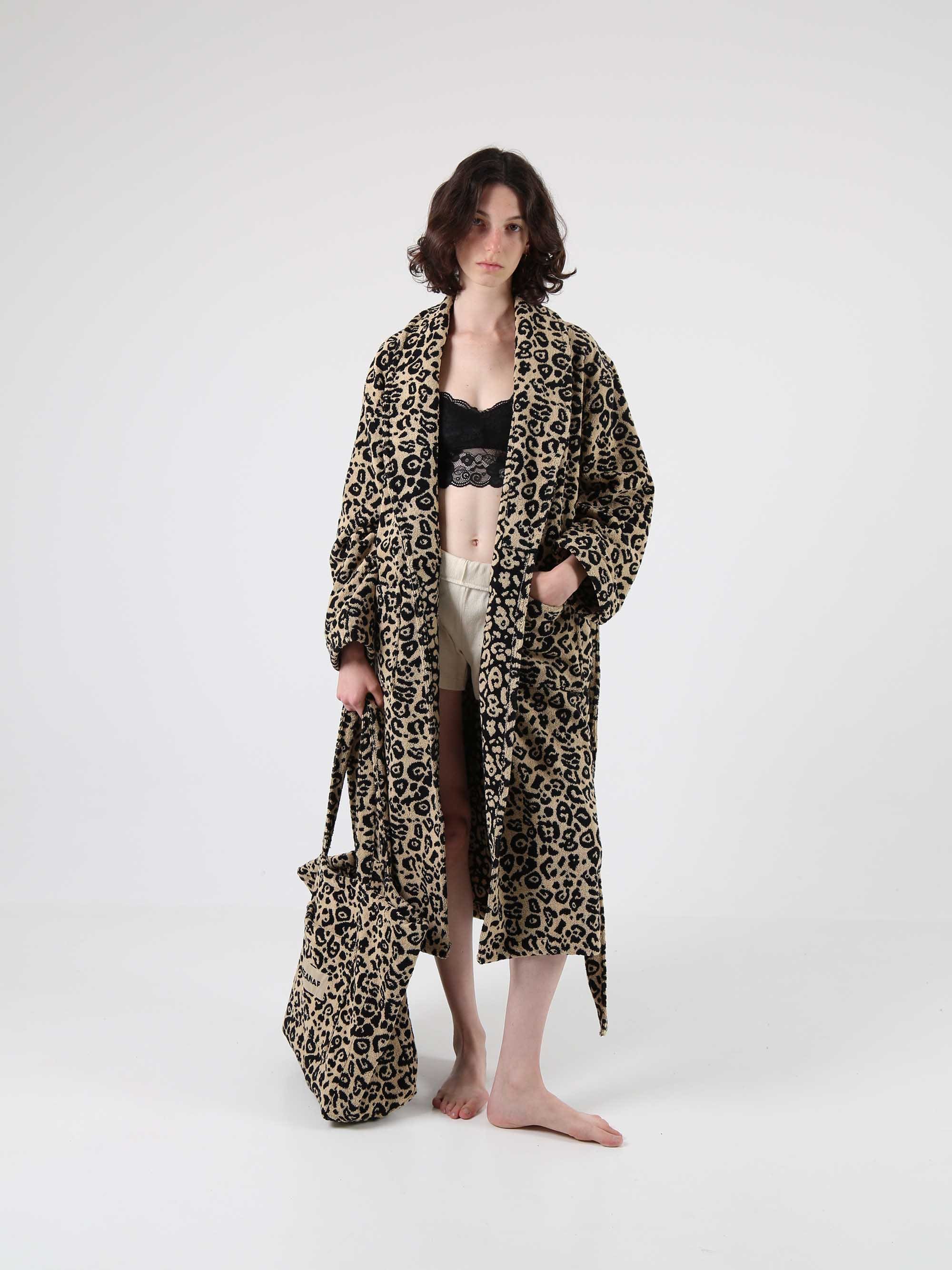
Robes: 320–450 GSM in waffle weave; 480–580 GSM in terry. Waffle weave luxury robes achieve a spa-like warmth at lower GSM because the textured grid traps air and allows airflow simultaneously — designed for lounging, not post-shower absorption. Terry robes at higher GSM absorb actively and work well for wrapping directly after bathing.
Travel: 300–380 GSM. Below this range towels become functionally thin. Above it they do not compress efficiently and add unnecessary weight to luggage.
Building a Bath Ritual That Reflects the Standard
A well-chosen towel is the foundation of a bath ritual. But a ritual — in the way that luxury hotel programmes understand the word — is a sequence, not a single object.
The structure that hospitality has refined over decades looks like this:
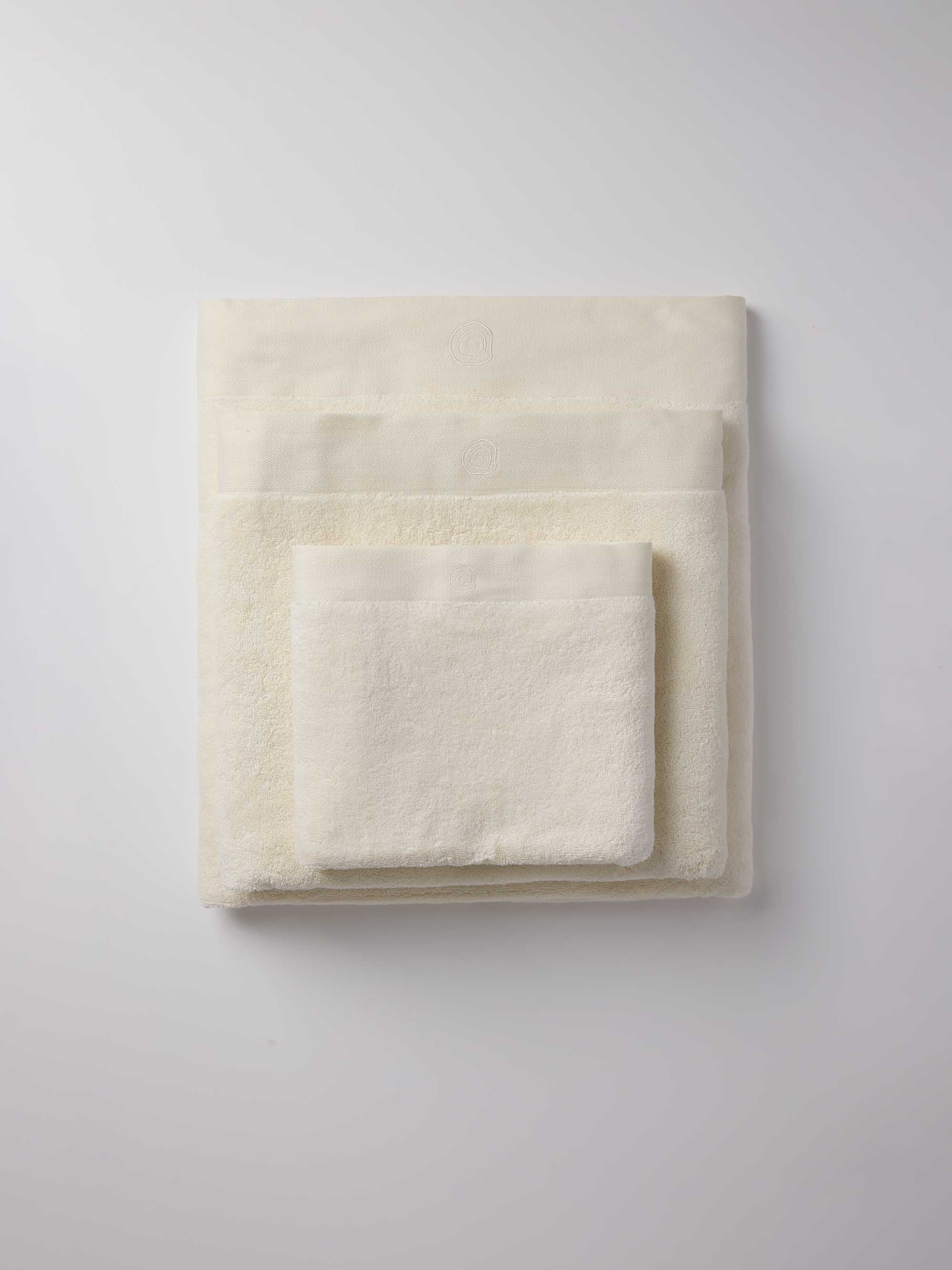
- Bath sheet or oversized towel at 580–620 GSM for the initial post-shower wrap — full-body coverage, immediate absorbency
- Hand towel at 420–480 GSM for the face — lighter, faster-drying, more frequent washing
- Robe for the transition from bathroom to the rest of the evening — the step where the ritual extends rather than ends
That third layer is where most home setups stop short. A robe at the right weight slows the nervous system. It signals the body that the day is in descent toward rest — not unlike what the right bedding does at the final transition into sleep.
Since 2004, TAKEANAP has built each collection around this continuity — the principle that a bath towel and a duvet are not separate categories but parts of a single, considered sequence. Each weight decision in the bath collection connects to the next layer of the ritual. That is the standard the hospitality industry has always worked to. It is available at home.
Frequently Asked Questions
What does GSM mean in towels? GSM stands for grams per square metre. It measures fabric density — how much yarn is packed into each square metre of finished textile. A higher GSM produces a denser, heavier towel with greater absorbency; a lower GSM produces a lighter fabric that dries faster. GSM is one of the most reliable indicators of a towel's quality tier, though yarn construction and fibre length also determine overall performance.
What GSM is a luxury hotel towel? Most luxury and five-star hotels specify bath towels between 550 and 650 GSM. This range balances high absorbency with durability across industrial laundry cycles. Some spa facilities use towels up to 700 GSM for single-use or low-rotation applications, but this weight is less practical for home daily use due to slower drying times.
Is a higher GSM towel always better? Not necessarily. Higher GSM towels absorb more and feel more substantial, but they also retain moisture longer — which can encourage mildew in bathrooms with limited airflow. For most homes, 550–620 GSM represents the practical ceiling for daily use. Above that range, the drying trade-off begins to outweigh the sensory benefit.
What is Zero-Twist cotton in towels? Zero-Twist is a yarn construction method in which cotton fibres run parallel rather than being spun with torsion. During weaving, a water-soluble binding thread holds the fibres in place; it dissolves completely on first wash. The resulting open-pile structure is softer to the touch, absorbs moisture faster, and is gentler on skin than conventionally twisted yarn — at the cost of requiring more careful laundering at lower temperatures.
What does OEKO-TEX Standard 100 mean on a towel? OEKO-TEX Standard 100 certifies that the finished textile has been independently tested and verified free of over 100 listed harmful substances, including heavy metals, formaldehyde, pesticide residues, and azo dyes. Certification applies to the specific product tested and must be renewed annually. It confirms chemical safety — it is not a quality, softness, or organic farming certification.
How do I know if my towel's GSM is too low? Practical signs that a towel is underweight for your use: it requires several passes across the skin to dry effectively; it loses loft quickly and begins to feel thin or abrasive after a few wash cycles; it does not hold its shape when folded or hung. Most mass-market towels priced at the entry level are 300–400 GSM — adequate for travel or secondary use, but undersized for a consistent daily ritual.
Can GSM tell me how long a towel will last? GSM is one indicator of durability but not a complete measure. A high-GSM towel made from short-staple or low-grade cotton will still pill, thin, and lose its pile within a season. Long-staple fibres — Egyptian cotton, Supima, or certified combed cotton — create the yarn integrity that sustains density over time. Look for GSM combined with fibre type and a finishing process free of silicon softeners, which mask quality temporarily but degrade the pile.